From Launch Moment to Lifecycle Reality
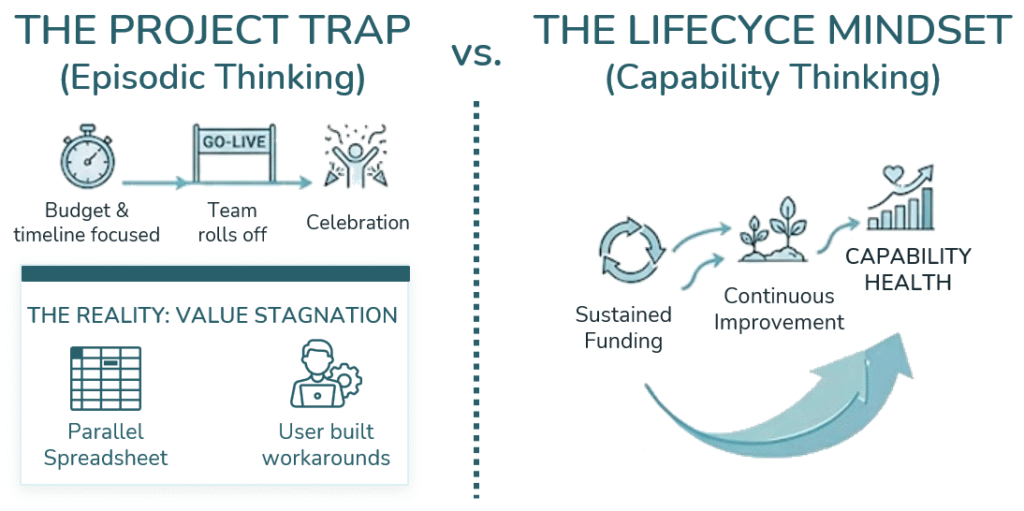
Walk into almost any organization six months after a major technology go-live, and you will find some version of the same scene. The implementation team has rolled off. The system is running. The executive sponsor has moved on to the next initiative. And somewhere in the business, a director is quietly building a parallel spreadsheet because “the new system doesn’t quite handle our workflow.”
The project shipped. The investment is not paying back.
The pattern is so common that many leaders no longer recognize it as a pattern. It looks like just the way things go. But the pattern is the predictable consequence of a mental model we inherited from a different era: one that treats technology investments as projects with a finish line rather than capabilities with a lifecycle.
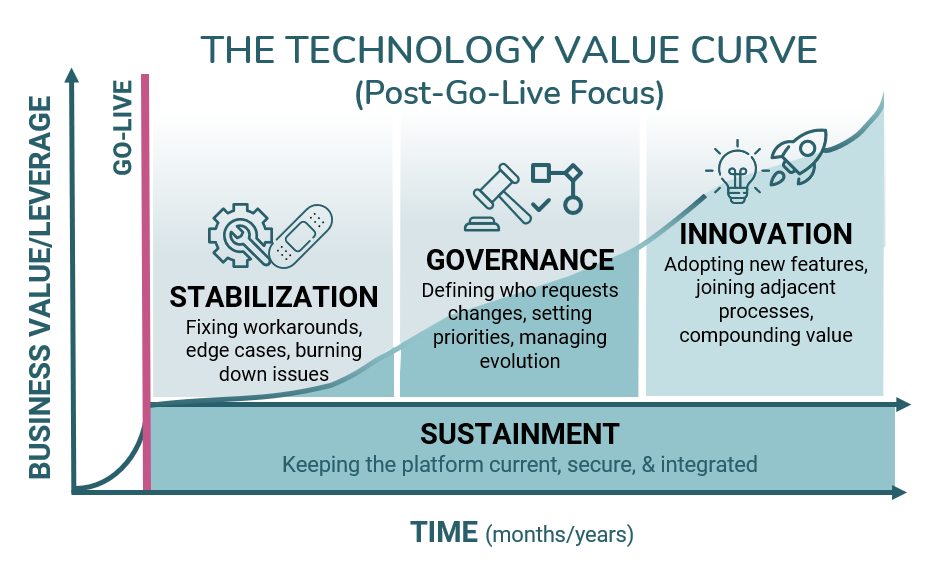
After go-live, every platform enters a value curve. It can rise, plateau, or decline. The difference is rarely just the original implementation. The difference is the operating model that follows.
The Problem with Treating Platforms Like Projects
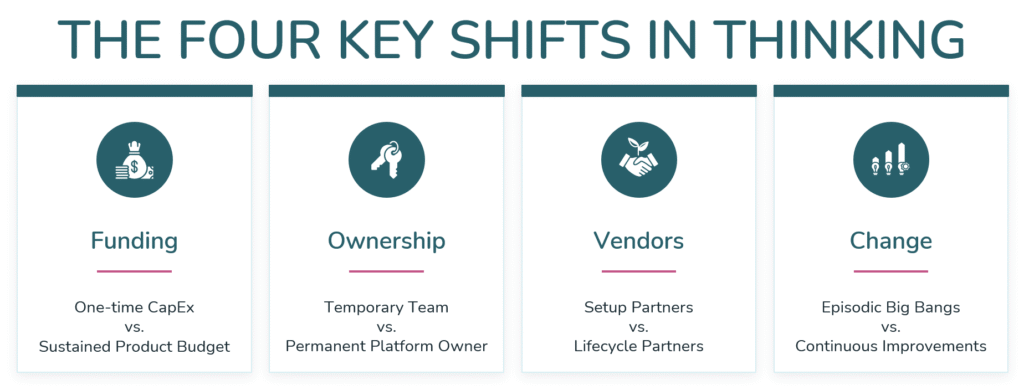
Funding shifts from project to product. Rather than approving a one-time capital expenditure and then starving the platform, leaders fund a sustained capability, including the people, governance, and a small enhancement budget that keeps it alive.
There is the stabilization period, when reality meets design, and the workarounds, edge cases, and “we forgot about that” moments surface. Treated well, stabilization is a quick burn-down. Treated poorly, it becomes the new permanent state.
The Phases Nobody Talks About Enough
Most implementation methodologies thoroughly describe the phases up to and including go-live. The phases after go-live are where value gets created, and where many organizations are flying blind.
There is the stabilization period, when reality meets design and the workarounds, edge cases, and “we forgot about that” moments surface. Treated well, stabilization is a quick burn-down. Treated poorly, it becomes the new permanent state.
There’s the governance phase, when the organization decides who can request changes, who sets priorities, what gets approved, and how the platform evolves without devolving into a mess. Companies that skip governance usually rediscover it three years later as an unmaintainable system that “needs to be replaced.”
There’s the innovation phase, when the platform stops being something you survive and starts being something you exploit. Teams adopt new features. Adjacent processes join the platform. The investment starts to compound rather than merely depreciate.
Underlying these phases is the sustainment discipline: the unglamorous, ongoing work of keeping the platform current, secure, integrated, and aligned with where the business is going.
These phases are not optional. The only choice is whether you fund them deliberately or pay for them later in the form of dysfunction.
Questions Worth Asking
If the lifecycle framing resonates, three questions are worth taking to your next leadership conversation.
Who owns our biggest technology platforms today, not the project, but the platform?
If the answer is unclear or distributed among people with other day jobs, that ambiguity is the first thing to fix.
What has changed in our business over the last twelve months that our systems have not caught up to?
The gap between business reality and platform configuration is the leading indicator of value erosion.
What would we do differently if we treated this system as a capability we will still be running in seven years?
Most decisions look different through that lens, including which partners we keep, how we budget, and how we develop the people who run the platform.
The Real Finish Line
There is no finish line for a modern technology investment. There is only a curve: value rising, plateauing, or declining. The disciplines after go-live determine which way that curve bends.
Leaders who internalize the lifecycle mindset stop celebrating go-lives as victories and start treating them as starts. The celebration comes later, quieter: a platform still earning its keep five years on, still adapting, and still creating leverage for the business.
That is the investment thesis worth defending.
Where Is Your Platform on the Curve?
If reading this brought a specific platform to mind, one that shipped and then quietly stalled, the most useful next step is a candid read on where it actually sits.
That is the question Kumo’s Health Check is designed to answer. We assess D365, Power Platform, Fabric, Power BI, and Microsoft 365 environments across four lenses: what is healthy, what is drifting, what is at risk, and where the next dollar of investment will compound.
The Express assessment takes 30 to 60 minutes and is complimentary. Standard and Comprehensive engagements go deeper for platforms with more at stake.
From there, we partner with leaders to do the work the lifecycle actually requires: stabilizing what is wobbling, governing what is drifting, and shipping the steady cadence of improvements that keep platforms earning their keep five years on.
We do not disappear after go-live. That is the point.
Everything else is just a project.